A sparring partner for public tenders
2026 · Copenhagen · 4 min read
Team Ola Isachsen Nordrum, Jens Nissen, Hans Kristian Hagge, Rasmus Staal Dinesen and Ole Sander Brudvik
- Problem
- A public tender lives or dies by its requirement specification. It has to hold professional needs, organisational demands and GDPR, NIS 2 and GPP together across a pile of documents — and one vague line can travel all the way to a complaint or a cancelled tender.
- Approach
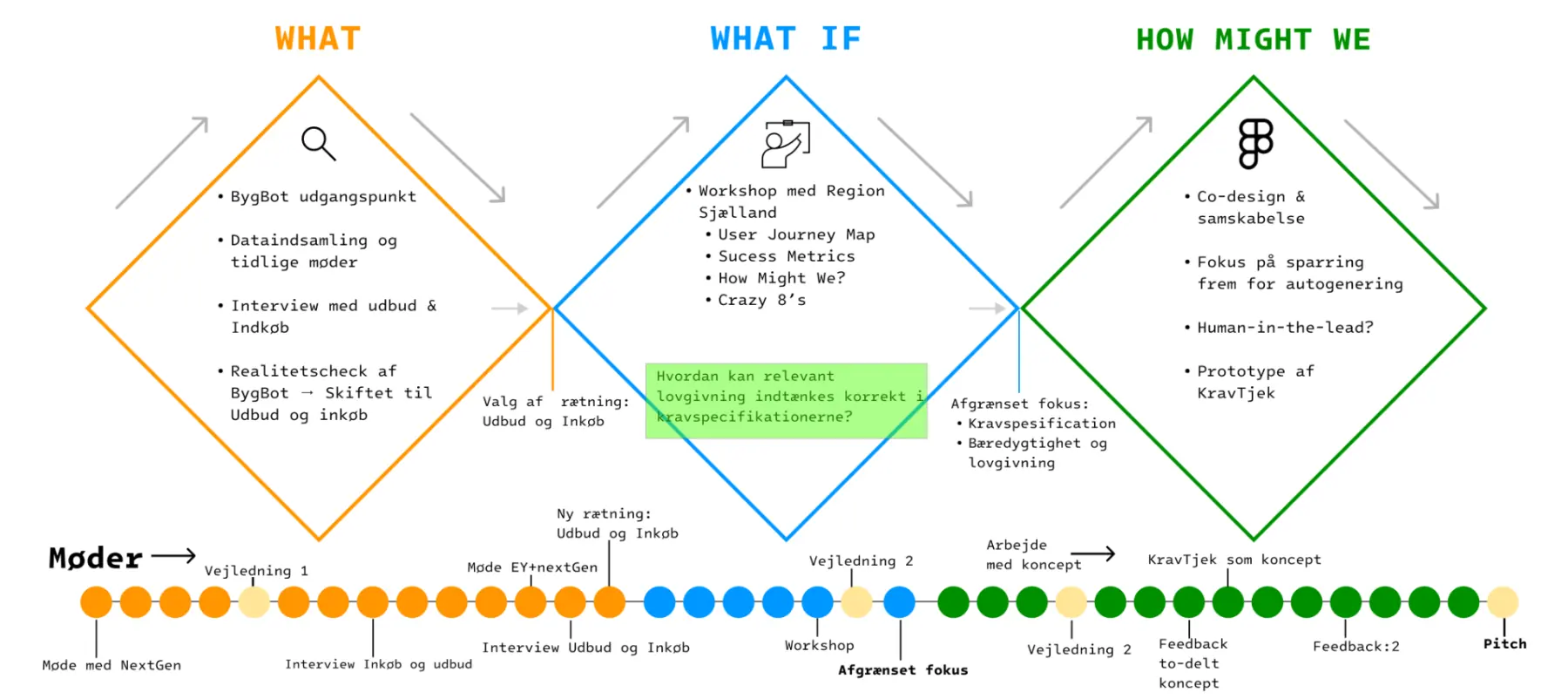
- Design ethnography with Region Sjælland’s Udbud & Indkøb: a workshop, user journey mapping, How-might-we, two concepts head to head, Crazy 8’s, two rounds of feedback, a high-fidelity prototype and a pitch.
- Outcome
- KravTjek. Upload a draft, see where it stands area by area, get every requirement reviewed with clarifications on offer, and spar against the law text — with the consultant, not the AI, holding the pen.
KravTjek is an AI sparring partner that reads a draft tender specification and says where it will hurt — before the lawyers do.
The project that fell apart, and the one we found
BygBot was already rolling when we arrived: an external supplier, a user group, a launch planned for spring 2026. Our job was to understand it well enough to be useful. What the first meetings gave us instead were the cracks — who owned the project, who the real user was, where the supplier’s delivery ended and the region’s ask began. Then the project’s key person left, and a network held together by one actor was no place for an outside group to work.
So we changed course. We had met the actors and gathered the material, and the material pointed next door: Udbud & Indkøb, who run the region’s IT tenders under a rulebook that never gets thinner — the Public Procurement Act, GDPR, the NIS 2 directive, green public procurement. They did not lack knowledge. They lacked a way to keep it all straight.
Nobody wanted a robot
The workshop was the turning point. Mapping the consultants’ journey with them made one thing clear: the hard part is coordination — many actors, many documents, many rules — and the hardest part of all is writing requirements about GDPR, NIS 2 and GPP correctly, every time, across all of it. Our How-might-we: how can relevant legislation such as GDPR, NIS 2 and GPP be built correctly into the requirement specifications?
Just as telling was what nobody asked for. Nobody wanted decisions made for them. AI came up again and again as a “sparring partner” — “help me with an overview”, “gather valid data” — a way to raise quality, not just speed. That settled the direction: not a system that takes over the work, but one that sharpens it, inside the workflow they already had.
Two concepts, one winner
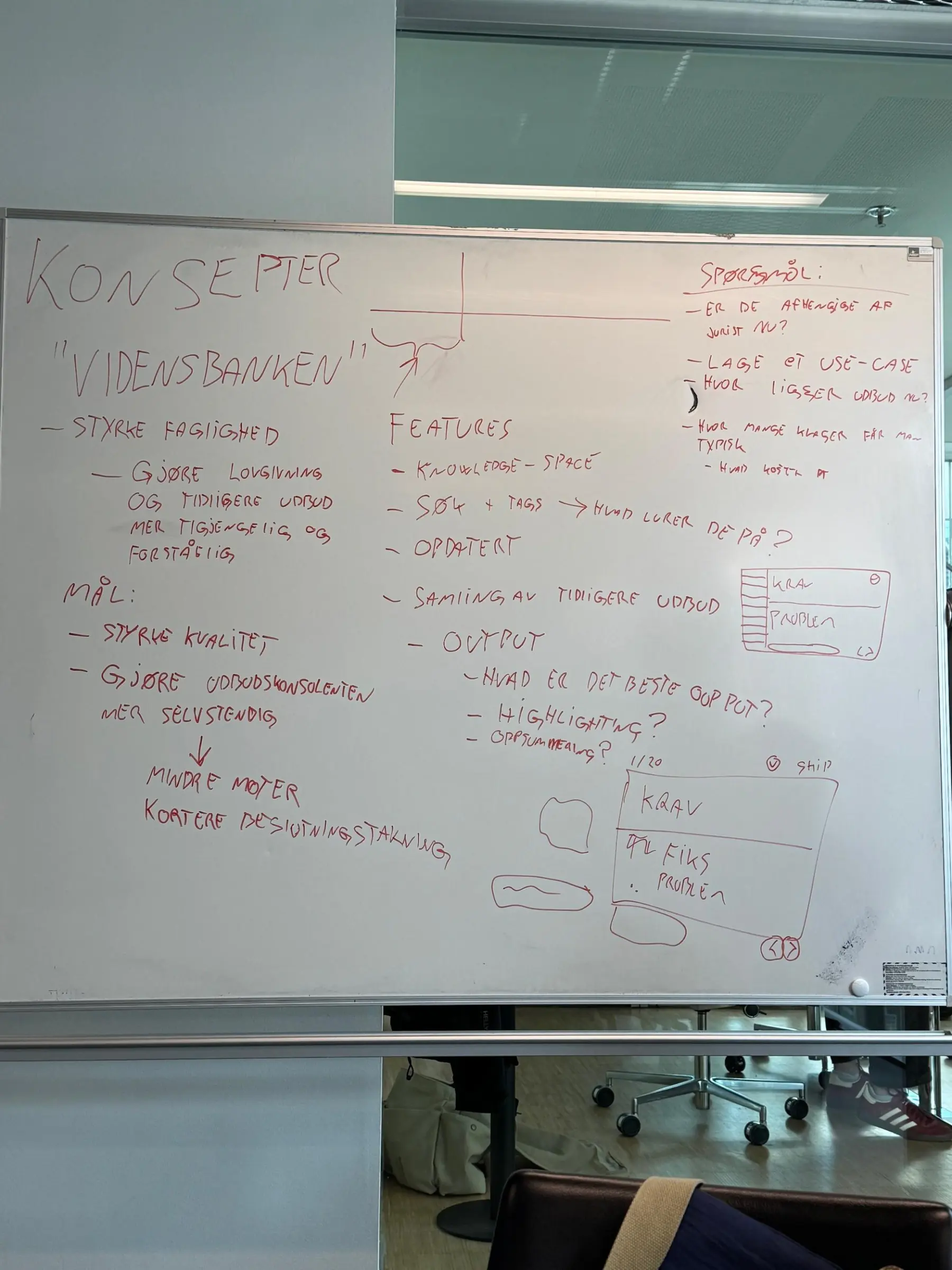
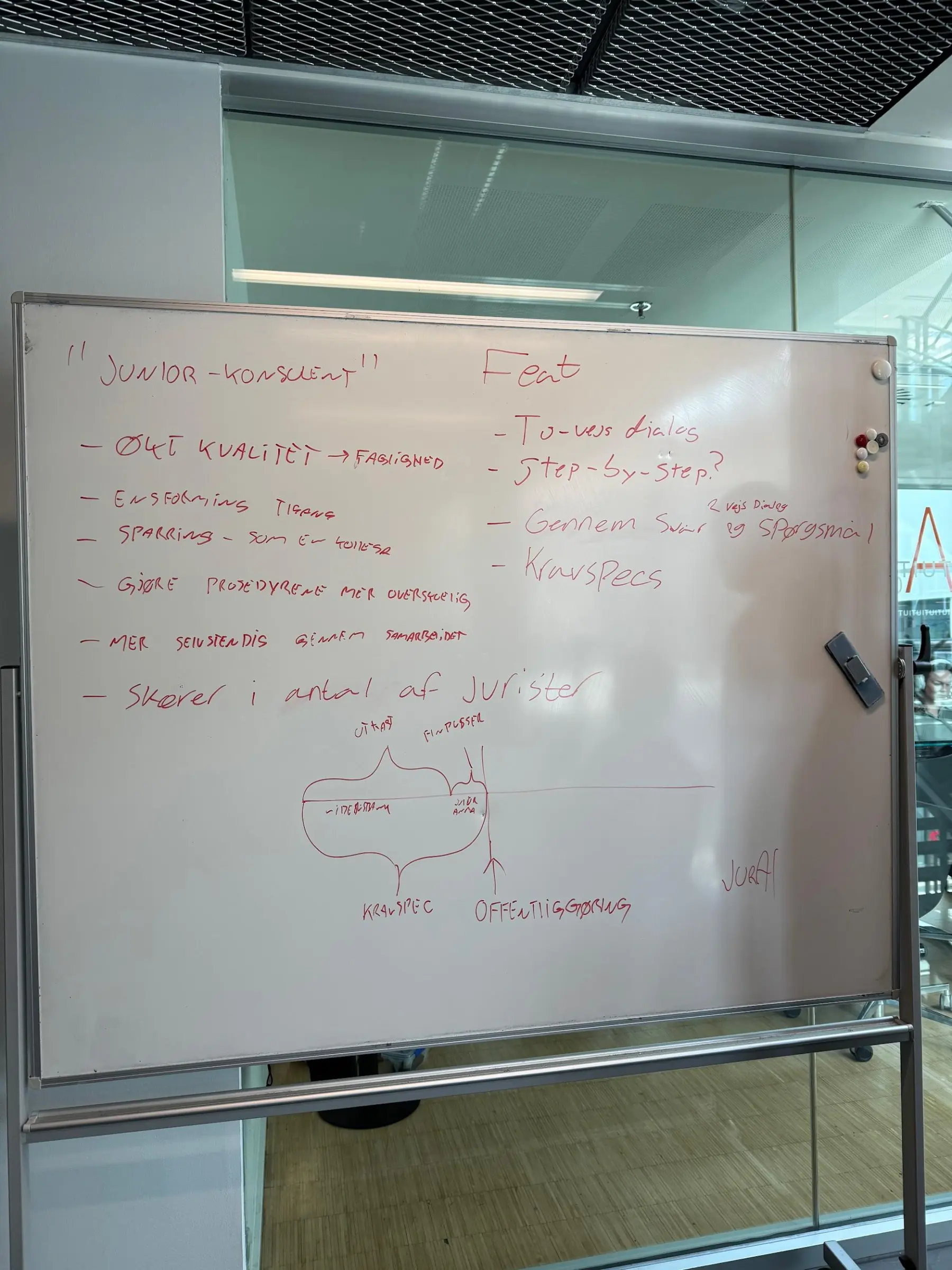
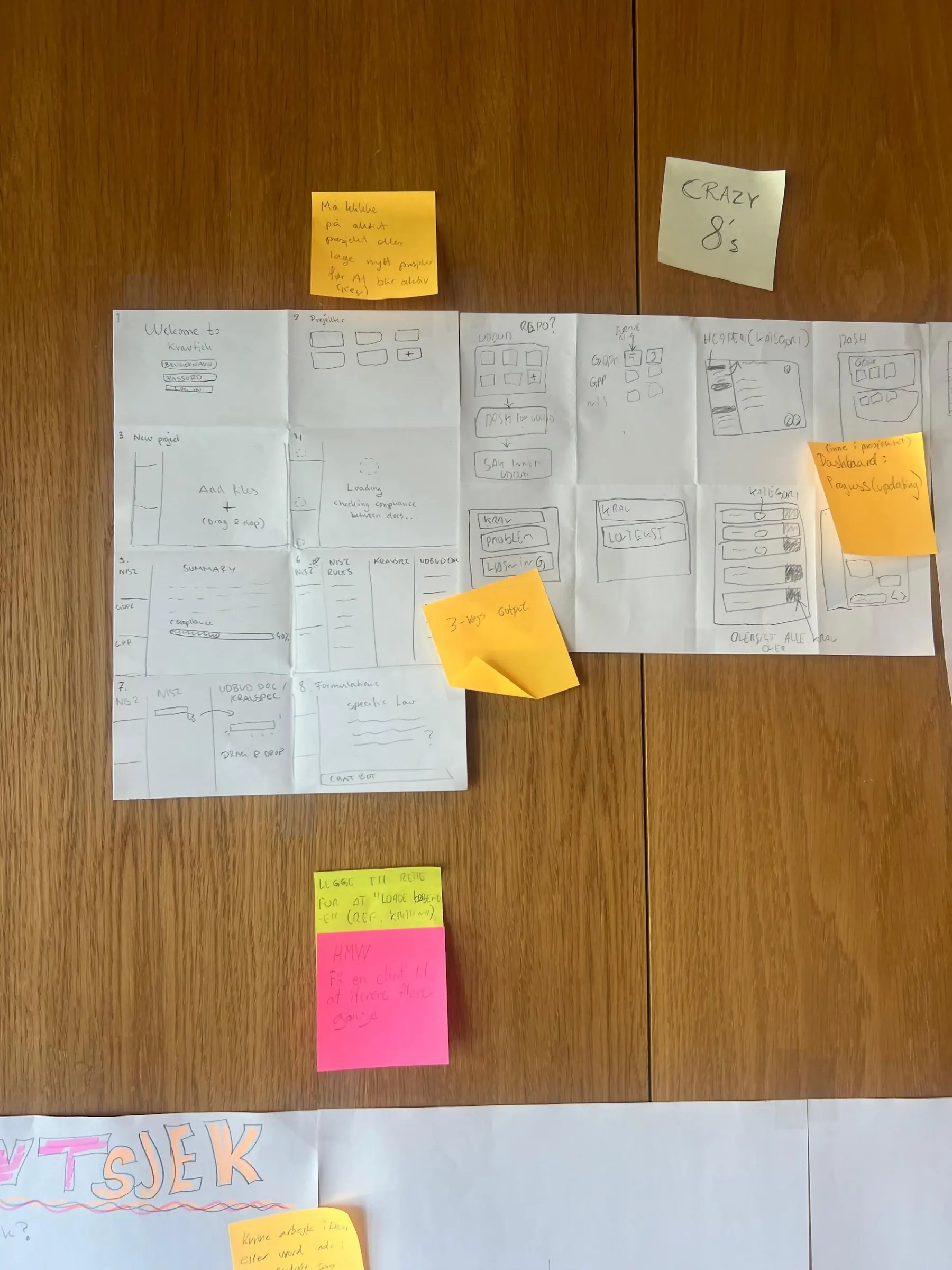
We sketched two and put both in front of the users. The knowledge bank: find and reuse earlier tenders and lessons learned. The junior consultant: reads your draft, flags what is unclear, suggests how to fix it.
The junior consultant won. A sparring partner close to the task, reviewing the consultant’s own draft before it reaches legal review, was where the need was greatest — the knowledge bank was welcome, but the regions were already building one together. That one round of feedback decided what KravTjek would be.
How much should the machine do?
The functions were the easy part. The hard question was how much the language model should do — write the specification, or help the consultant write it? Live as its own system, or next to the programs they already use? In a job that already means juggling several systems, a new one can add weight instead of taking it off.
The second feedback round settled it: an overview that was “nice and intuitive”, and a dialogue that sparred instead of deciding. So KravTjek suggests wording, pulls requirements from the law text, answers questions about NIS 2 and GDPR — and stops there. A machine that writes the legal requirements takes too much judgement away from the person who signs.
The pitch, and the blind spot
We pitched KravTjek through a concrete scenario — a specification for IT client equipment — with the prototype as a probe, not a finished system. The department called it more realistic and more usable than the AI initiatives they had seen, and named the narrow scope as the strength: “much more realistic and faster to execute on”, as one consultant put it. The win was finding one bounded moment where AI actually helps — not automating the tender.
The blind spot: KravTjek is a design proposal. It has not been legally reviewed or tested in operation, and the prototype simulates a workflow with no friction in it. We could not test how a real language model handles bad input, complex hardware specifications or citations it makes up. The next step should not chase time savings. It should be a small, critical pilot that stress-tests exactly those things — and whether consultants keep their own judgement when the machine “helps”.
KravTjek, in one workflow
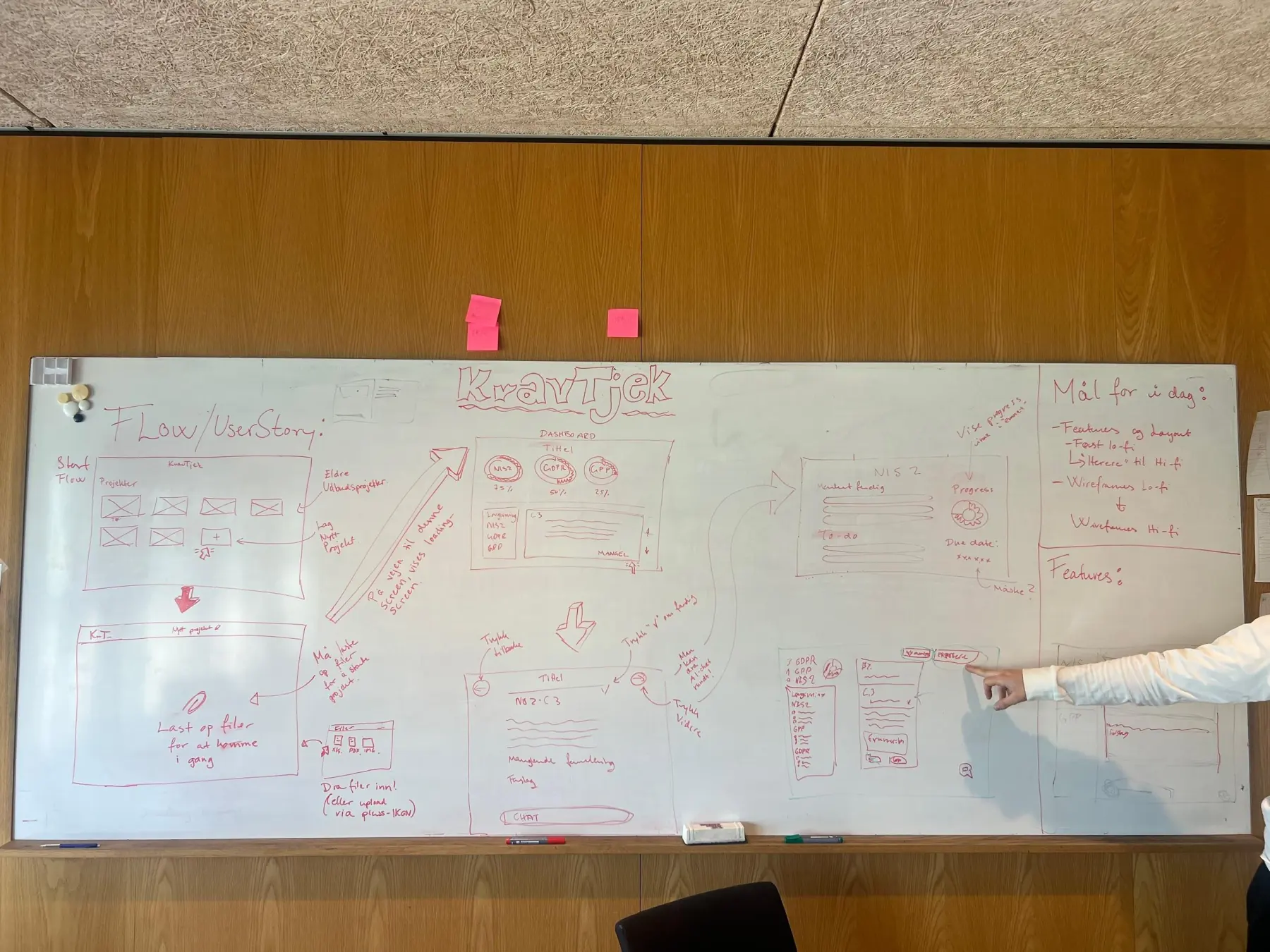
Upload a draft specification in the formats you already use, and get the overview: which requirements need attention, and how far along the work is.
- The specification by area, with progress per area.
- Every requirement reviewed: ambiguities, gaps, and clarifications you can drop straight into the text.
- Bounded sparring against NIS 2, GDPR and GPP — a source, not a chat.
- Never “approved”, never a legal ruling. Nothing closes without the consultant’s own mark.
- Next to Excel and Word, not instead of them, so it can come in gradually.
The consultant keeps the pen — and spends less energy building an overview and more on making the calls.
Get in toucholebrudvikjr@hotmail.com